



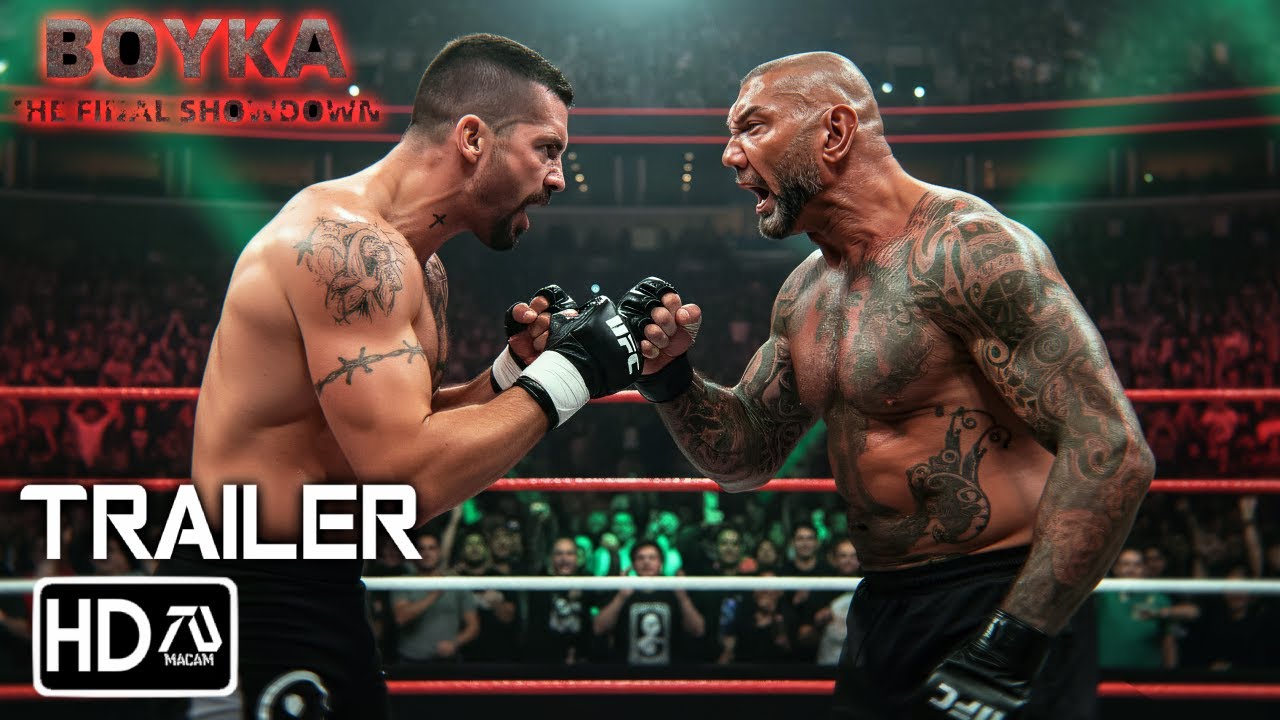
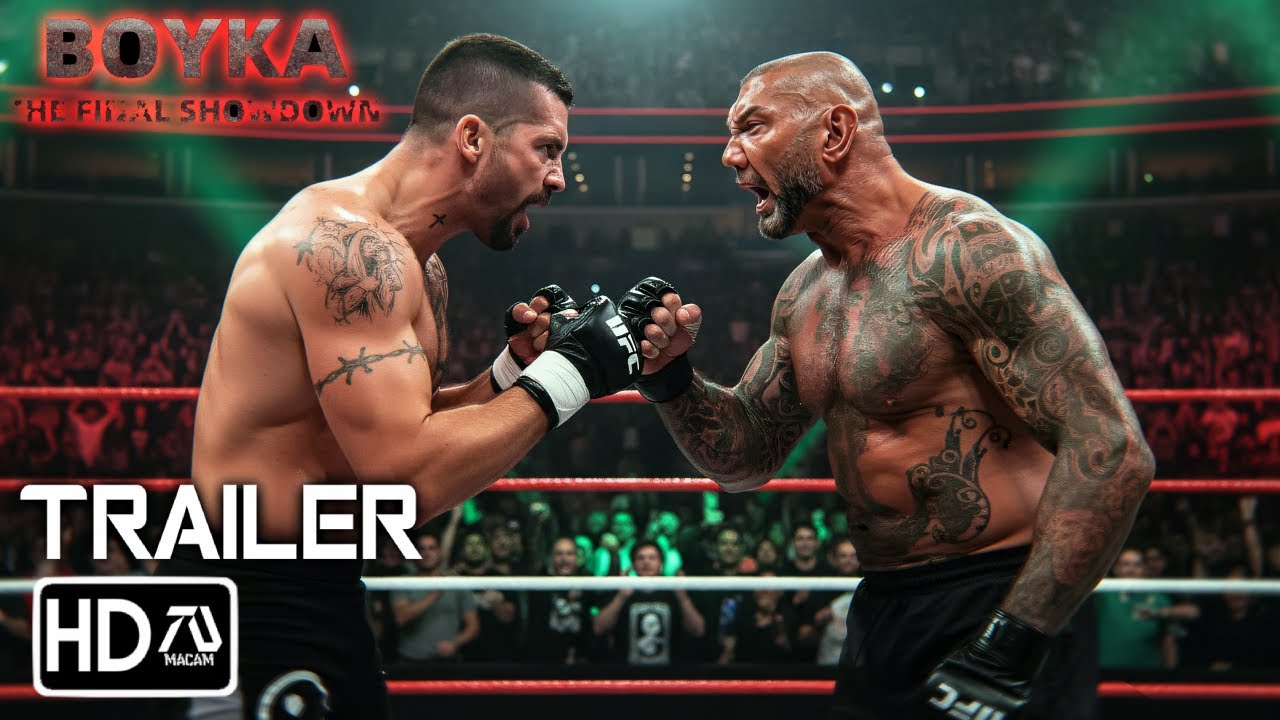
A Warrior at the End of His Road
There is a particular sadness that comes with watching a fighter who knows his best days are behind him. Yuri Boyka (2026) leans into that sadness with surprising sincerity. This latest chapter in the long-running Boyka saga is not content to simply recycle bruises and broken bones. Instead, it asks a quieter, more painful question: what remains of a man when the legend has already been written?

Scott Adkins returns to the role that defined his career, but this time Boyka is no longer chasing the title of the most complete fighter in the world. He is chasing something far less visible and far harder to win—peace. The film understands that age is not just a number but a narrative force, etched into every scar, every slower recovery, every hesitation before the bell rings.

Plot Overview: Redemption, Not Glory
The story pulls Boyka back into the underground fighting world he tried to leave behind. A rival from his past resurfaces, dragging with him unresolved sins and debts that refuse to stay buried. The stakes are deliberately personal. This is not about belts, rankings, or applause. It is about freedom, legacy, and the question of whether redemption is still possible for a man who has lived by violence.

The screenplay keeps the plot lean, almost skeletal, but that simplicity works in its favor. Like a well-fought match, there is no wasted movement. Every confrontation exists to strip Boyka down further, forcing him to confront not just his opponents, but the man he used to be.
Performances: Three Titans, Three Philosophies
The film’s greatest strength lies in its casting, assembling three martial arts icons whose styles and screen personas clash in fascinating ways.
- Scott Adkins delivers one of his most emotionally grounded performances. His Boyka is battle-worn, restrained, and visibly tired, yet still burning with stubborn resolve.
- Iko Uwais brings a terrifying precision to his role. His movements are sharp and economical, like a blade that never hesitates. Every strike feels intentional, almost surgical.
- Michael Jai White radiates power and experience. He fights like a man who understands weight, gravity, and consequence. When he throws a punch, the air seems to leave the room.
What makes these performances resonate is not just physical skill, but contrast. Each fighter represents a different relationship with violence—faith, discipline, and dominance—turning the arena into a philosophical battleground as much as a physical one.
Action Direction: Pain as a Language
The action in Yuri Boyka (2026) is refreshingly grounded. There is no glossy excess, no frantic editing designed to hide shortcomings. The camera lingers just long enough for you to feel the impact. Every fall hurts. Every hit lands with consequence.
The choreography emphasizes endurance over flash. These are not young men showing off; they are warriors measuring how much punishment their bodies can still endure. The film understands that pain, when portrayed honestly, becomes a form of storytelling.
Themes: Aging, Identity, and the Cost of Violence
At its core, this is a film about aging in a genre that rarely allows its heroes to grow old. Boyka is forced to reckon with the gap between who he was and who he wants to be. The fights are not just physical trials but moral ones, asking whether survival alone is enough.
The movie avoids romanticizing brutality. Violence here is ugly, exhausting, and deeply personal. Redemption is not handed out as a reward; it is something Boyka must decide he is worthy of, regardless of the outcome.
Technical Craft: Stripped Down and Purposeful
The cinematography favors muted tones and shadowed spaces, reinforcing the film’s somber mood. The underground arenas feel claustrophobic, less like stages and more like cages. The score stays restrained, surfacing only when emotion demands it, never instructing the audience how to feel.
This minimalist approach allows performances and choreography to carry the weight, a wise decision that keeps the film grounded and sincere.
Strengths and Weaknesses
What Works
- Emotionally mature take on a familiar character
- Authentic, hard-hitting fight choreography
- Strong contrast between the three lead fighters
What Falls Short
- Supporting characters are lightly sketched
- The narrative may feel understated for viewers expecting spectacle
Final Verdict: A Worthy Farewell
Yuri Boyka (2026) may not redefine the martial arts genre, but it does something far rarer—it allows its hero to grow older, slower, and wiser without stripping him of dignity. This is not a film about being the best. It is about being honest.
For longtime fans, it feels like a thoughtful closing chapter. For newcomers, it stands as a reminder that even in the most brutal genres, there is room for reflection, humanity, and grace. Boyka steps into the ring one last time, not to conquer, but to understand himself. And that, in its own quiet way, is a victory.