


A Myth Reawakened on Familiar Stones
There is a certain audacity in returning to a monument as symbol-laden as the Great Wall and asking it to shoulder even more myth. The Great Wall 2, directed once again by Zhang Yimou, does exactly that. It arrives not as an apology for the first film, nor as a self-conscious correction, but as a louder, more confident extension of its core idea: that ancient legend and modern blockbuster mechanics can coexist on a grand scale.

Yimou, a filmmaker who has spent decades moving fluidly between intimate human dramas and ceremonial spectacle, leans unapologetically into scale. This sequel understands that its audience has come to see the wall tested, breached, and reimagined as a living battlefield. What it adds is a clearer sense of purpose and a stronger emotional throughline.

Story and Structure
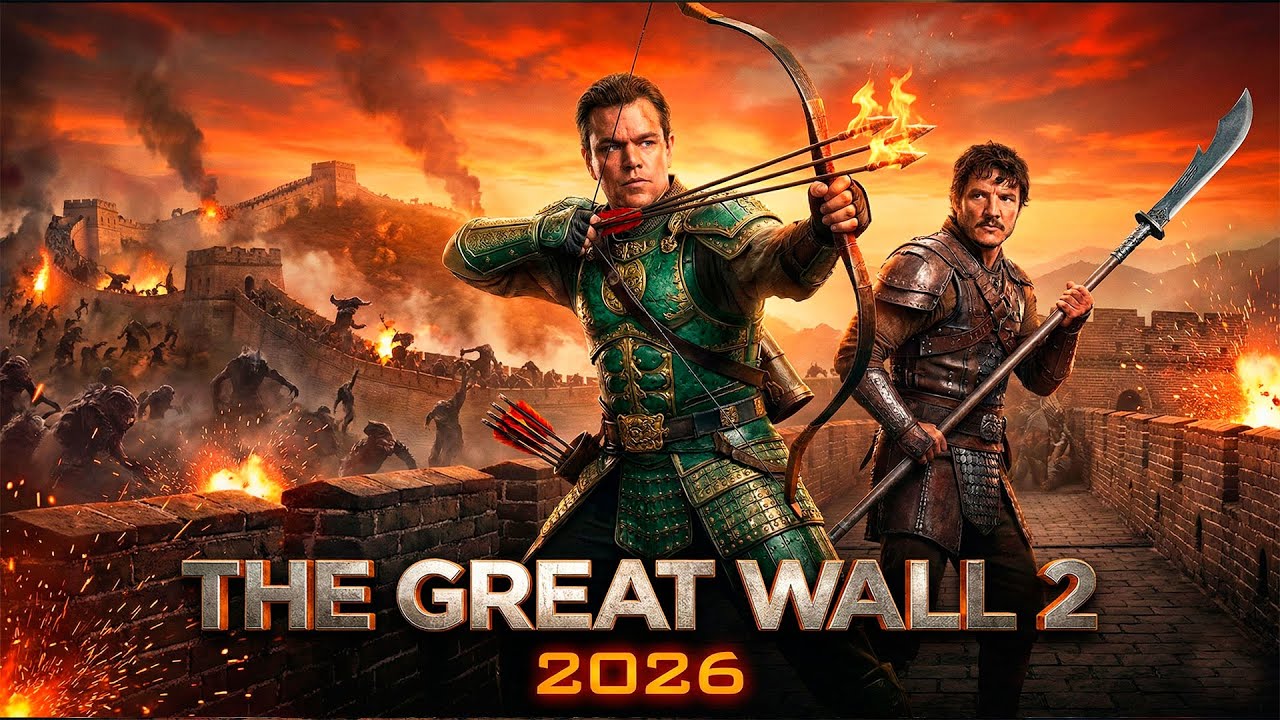
The narrative picks up with the return of monstrous forces long believed defeated. These winged predators do not merely attack; they adapt. The Wall, once thought an impenetrable answer, becomes a question again. Matt Damon’s mercenary, still carrying the moral residue of survival and desertion, reunites with Jing Tian’s strategist, whose mind remains the film’s sharpest weapon.

The screenplay is refreshingly direct. It knows when to move pieces into place and when to let the audience marvel. While no one will confuse the plot with a historical epic, it earns its momentum by respecting cause and effect. Battles have consequences, and each tactical choice feels like it matters.
Key Narrative Strengths
- A clearer motivation for both heroes and monsters
- Stronger emphasis on strategy over brute force
- A steady rhythm that balances quiet preparation with explosive action
Performances Anchoring the Chaos
Matt Damon approaches his role with a slightly more weathered presence. His mercenary is no longer an outsider dazzled by unfamiliar customs; he is a man who has chosen where he stands. Damon plays this not as heroics, but as obligation, which grounds the film’s most extravagant moments.
Jing Tian, however, remains the film’s true center. Her tactician is defined by precision, resolve, and a calm intelligence that cuts through the noise of war. Zhang Yimou frames her not as a symbol, but as a decision-maker, and the film is better for it.
Direction, Visuals, and World-Building
Visually, The Great Wall 2 is relentless in its ambition. Yimou transforms the Wall into a shifting organism of pulleys, towers, fire, and wind. The monsters are not just visual effects but spatial threats, integrated into the geography of the action. One feels the height of the watchtowers, the drop beyond the stone, and the vulnerability that comes with every misstep.
The color palette is more restrained than before, favoring ash, iron, and flame. This choice gives the film a heavier tone, one that suggests endurance rather than novelty. The action sequences are staged with clarity, a virtue often missing in effects-driven cinema.
Technical Highlights
- Clean, readable action choreography
- Production design that emphasizes function as much as beauty
- Sound design that gives the creatures weight and presence
Themes Beneath the Spectacle
Beneath the roar and fire, the film circles familiar but effective ideas: unity across cultures, the cost of vigilance, and the danger of believing any defense is permanent. The Wall stands not just as protection, but as a reminder that survival requires constant adaptation.
Yimou resists irony. He treats myth seriously, not as something to be deconstructed, but as something to be inhabited. That sincerity may not appeal to everyone, but it gives the film its distinctive voice.
Final Verdict
The Great Wall 2 is not a small film, nor does it pretend to be. It is a muscular, visually assured sequel that understands its own identity. Where it succeeds is in marrying spectacle with intention, allowing strategy and character to coexist with creature-driven chaos.
This is blockbuster filmmaking that believes scale can still serve story. It may not convert skeptics of myth-heavy action cinema, but for viewers willing to meet it on its own terms, it offers a thrilling, confident return to the Wall.